Cost codes without the headache: job costing for growing contractors


January is the one month of the year when a contractor can change how the business runs without fighting live jobs every step of the way. If you make one back-office resolution this year, make it this: set up proper cost codes and actually use them. Nothing else you do in the office will tell you more about your business.
Job costing has a reputation for being an accountant's hobby. It is not. It is the difference between knowing which kinds of work make you money and guessing. Here is how to set it up without drowning in it.
What a cost code actually does
A cost code is a consistent label for a type of cost, such as groundworks labour, first fix materials, plant hire or subcontract electrical, used identically in the estimate, on every cost as it lands, and in the report at the end. Its whole power comes from those three uses lining up.
You priced first fix at 380 hours; it took 445. You now know something about your next tender that competitors guessing from gut feel do not.
When those three line up, magic happens. When they do not line up, job costing is theatre.
How many codes? Fewer than you think
The classic mistake is copying a big contractor's structure and creating 200 codes on day one. Six months later everything is coded to Miscellaneous because nobody could find the right one on a phone screen in the rain.
The guidance that consistently works for smaller contractors is 20 to 30 codes in total, and most practitioners suggest 16 to 25 in active use per job. Detailed enough that the answers mean something, short enough that a foreman picks the right one in five seconds. A simple structure that serves most building contractors:
- Preliminaries: site setup, welfare, supervision
- Groundworks: labour and materials as separate codes
- Structure: frame, blockwork, roof
- First fix: carpentry, electrical, plumbing
- Second fix: the same trades, finishing stage
- Finishes: plastering, painting, flooring
- External: drainage, paving, landscaping
- Plant and equipment
- Subcontractors: one code per major trade package
Split labour and materials within a code wherever you can. They drift for different reasons, and lumping them together hides which one is hurting you.
Pro tip
Print the final code list on a single page and pin it in the site office and every van. If the list does not fit on one page, it is too long to survive contact with a busy site.
The three habits that make it stick
Estimate in the same codes you track in. If the tender is priced in one structure and costs are recorded in another, you can never compare them, and comparison is the entire point. Build your pricing templates around the same code list.
Code costs when they happen, not at month end. The foreman logging hours should pick the code that day. The PO should carry a code when it is raised, not when the invoice arrives six weeks later and nobody remembers what the order was for. Month-end coding from memory is fiction with decimals.
Review weekly, briefly. The contractors who get value from job costing do a 20-minute weekly look at budget versus actual per code on live jobs, exactly as the textbooks recommend, because small overruns caught early are conversations rather than write-offs. The ones who do not, produce beautiful reports about money that is already gone.
What good looks like after three months
Set up in January and by April you should be able to answer questions like these without opening a single spreadsheet: Which trade package went furthest over estimate last quarter, and by how much? What does a square metre of our typical blockwork actually cost us in labour? Are we consistently underpricing second fix?
Those answers compound. Your estimating gets sharper every job because it is fed by real outturn costs instead of the same assumptions you started with five years ago. That is the quiet superpower of the well-run smaller contractor: their price list is built from evidence.
A word on tools
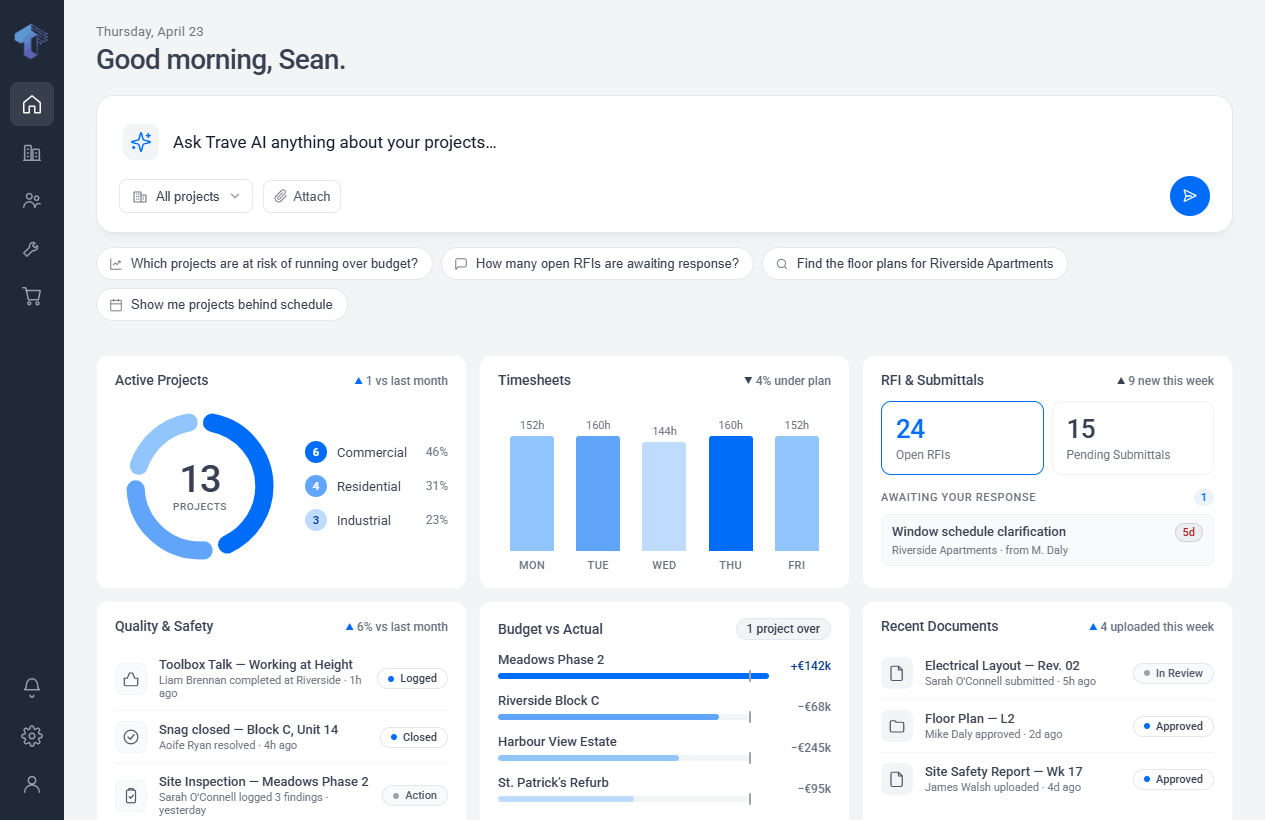
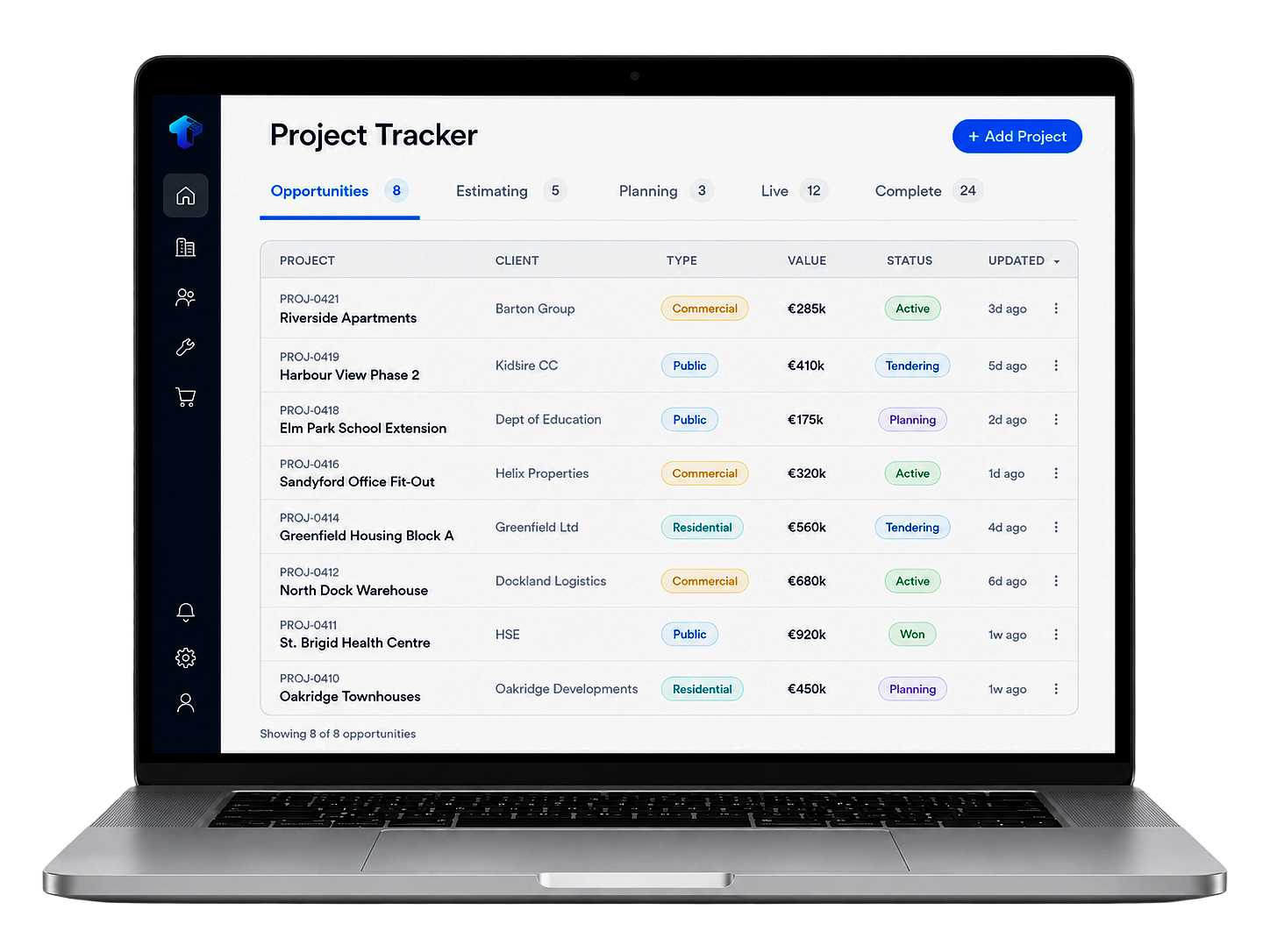
You can do genuine job costing in a spreadsheet, and if you are running one job at a time, you probably should start there. The wheels come off with concurrent jobs, because now coding discipline depends on retyping between timesheets, orders, invoices and the costing file, and every retype is an error or a delay. That is the point where purpose-built systems earn their keep: hours and purchase orders carry their codes automatically, invoices match against orders, and the budget versus actual view updates itself.
Naturally I would say that, because it is what we built Trave to do, with every project starting from a standard code template so the discipline is built in from day one. But tool or no tool, the principle stands. Pick your codes this month, keep the list short, and use it everywhere. By this time next year your tenders will be better for it.

Built for construction. See what Trave could do for your team.
Book a demo